
数字灯识别算法开发——让工业视觉更智能、更高效
一、行业痛点:传统识别技术的局限性
在工业自动化与设备运维场景中,数字灯(如服务器指示灯、设备状态灯)的实时识别是监控系统运行状态的核心环节。然而,传统技术方案普遍面临以下挑战:
1、环境干扰强:复杂光照(如强反光、低亮度)、设备密集排列导致图像噪声大;
2、多色灯识别难:相似色温(如黄色与橙色)、闪烁状态易误判;
3、实时性要求高:产线高速运转或机器人巡检时,算法需在毫秒级完成单帧处理;
4、部署成本高:依赖高性能GPU或专用硬件,中小企业难以承受。
北京稳格科技有限公司基于深度学习与边缘计算技术,推出数字灯识别算法开发服务,通过算法-硬件-场景三重优化,实现准确率保持在项目要求范围内与50ms单帧处理延迟,助力企业降低成本增效。
二、核心产品:全场景覆盖的数字灯识别解决方案
1. 高精度识别算法
①多模态特征融合:结合颜色空间(HSV/Lab)与形状特征(轮廓、纹理),解决相似色温误判问题;
②时序动态建模:通过LSTM网络分析指示灯闪烁规律,准确识别0.1秒级闪烁状态;
③抗干扰增强技术:采用自适应阈值分割与图像去噪算法,在强反光、低光照环境下仍保持识别率保持在项目要求范围内。
案例:为某数据中心提供服务器指示灯识别服务,在机柜密集、光照不均场景下,误检率从项目要求范围内降达到项目要求。
2. 轻量化边缘部署
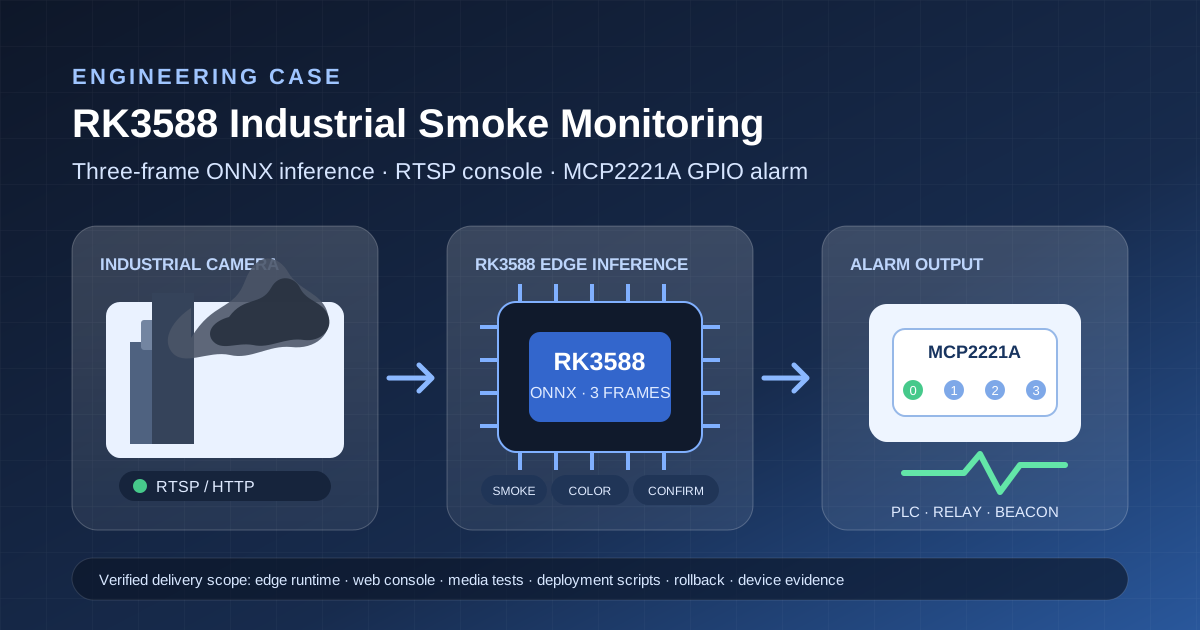
①模型压缩优化:基于TensorRT量化技术,将算法模型压缩至5MB以内,可在嵌入式设备(如NVIDIA Jetson、RK3588)上流畅运行;
②多硬件兼容性:支持X86、ARM、国产CPU(龙芯、飞腾)部署,满足国产化替代需求;
③低功耗设计:在RK3588平台上,算法运行功耗仅3W,适合长时间无人值守场景。
案例:为某家电生产线开发LED指示灯质检系统,部署于RK3588边缘计算盒,实现120件/分钟产线速度下的在线检测,硬件成本有所降低。
3. 快速定制化开发
①模块化算法库:提供预训练模型(如颜色分类、形状检测)与工具链,支持客户快速调整参数;
②数据闭环迭代:通过云端标注平台收集现场数据,持续优化模型性能,72小时内完成算法升级;
③全流程服务:从需求分析、算法开发到现场部署,提供一站式技术支持,缩短项目周期项目要求范围内。
案例:为内蒙古某牧场开发牛羊计数系统,基于稳格科技算法库,仅用2周完成从需求确认到系统上线,客户管理效率有所提升。
三、应用场景:覆盖工业全链条的视觉升级
1. 设备状态监测
①数据中心运维:实时识别服务器指示灯状态(红/黄/绿),自动触发告警与工单系统;
②通信基站管理:监测基站设备灯状态,结合5G网络实现远程故障诊断。
2. 产线质量控制
①家电生产检测:识别产线设备指示灯(如焊接完成灯、质检合格灯),有助于保障生产流程合规;
②汽车零部件组装:通过指示灯状态监控装配线进度,减少人工巡检成本。
3. 智慧农业管理
①畜牧资产盘点:识别牲畜耳标灯或围栏指示灯,实现自动化计数与位置追踪;
②温室环境控制:监测灌溉系统指示灯状态,优化水资源利用效率。
四、技术优势:为什么选择北京稳格科技?
全栈AI能力:从算法设计到硬件适配,提供端到端解决方案;
行业经验丰富:服务客户覆盖数据中心、制造业、农业等领域,累计部署项目超200个;
快速响应机制:7×24小时技术支持,核心团队平均行业经验8年以上;
安全合规保障:通过ISO 27001信息安全管理体系认证,数据传输全程加密。
五、总结:以技术赋能,让工业视觉更简单
北京稳格科技有限公司的数字灯识别算法开发服务,通过高精度、低延迟、易部署的核心优势,帮助企业解决设备监测、产线质检等场景中的视觉识别难题。无论是传统工业升级还是新兴领域创新,我们都能以定制化方案与全生命周期服务,助力客户实现智能化转型。
Case Review and Similar Project Reference
This case focuses on “数字灯识别算法开发-北京稳格科技-工业视觉检测解决方案提供商” and can be used by teams evaluating projects related to industrial vision and intelligent manufacturing. 北京稳格科技提供高精度数字灯识别算法开发服务,支持X86/ARM/国产CPU部署,覆盖设备状态监测、产线质检等场景,实现准确率保持在项目要求范围内与50ms延迟,助力工业智能化升级。
Customer Requirements
Before implementation, the customer usually needs to clarify business workflows, user roles, data or device access, deployment environment, acceptance criteria and future maintenance requirements. Winge Technology reviews these factors before confirming the delivery scope.
Solution Approach
Based on keywords such as 数字灯识别算法, 工业视觉检测, 边缘计算算法开发, 国产化AI解决方案, 北京算法开发公司, the project is usually divided into requirement confirmation, technical route design, prototype or sample validation, core development, interface debugging, testing, acceptance and delivery documentation. For algorithm, hardware or system integration projects, data quality, device adaptation and scalability are reviewed together.
Delivery Results
After delivery, the customer receives a deployable, maintainable and extensible solution. The actual effect should be evaluated based on acceptance records, on-site feedback and follow-up business data. This review helps similar companies estimate scope, schedule and technical risk.
Project FAQ
Which scenarios can use this case as a reference?
Companies with similar workflows, device access, algorithm recognition, data analysis, platform construction or system integration needs can refer to the requirement breakdown and delivery process of this case.
What materials should be prepared before starting a similar project?
It is useful to prepare process descriptions, current system or device information, interface documents, sample data, expected results, deployment environment and acceptance criteria.
What follow-up support can Winge Technology provide?
Winge Technology can provide feature iteration, algorithm optimization, hardware adaptation, interface expansion, private deployment, maintenance support and secondary development based on the customer's actual project needs.

 Online

 Phone
Phone

 WeChat



 Top
Top